Ice Storm Power Outage: Electrical Safety Tips for East Texas Homes
The ice has been building on the pines since midnight. Then comes a crack, a flicker, and the whole street goes dark. In East Texas, ice storms bring down limbs and power lines, and the first hours of an outage are when most risky decisions get made: the generator, the heat source, the downed wire in the yard. This guide covers what to do, what to avoid, and when to bring in our emergency electrician service.
Stay away from downed lines
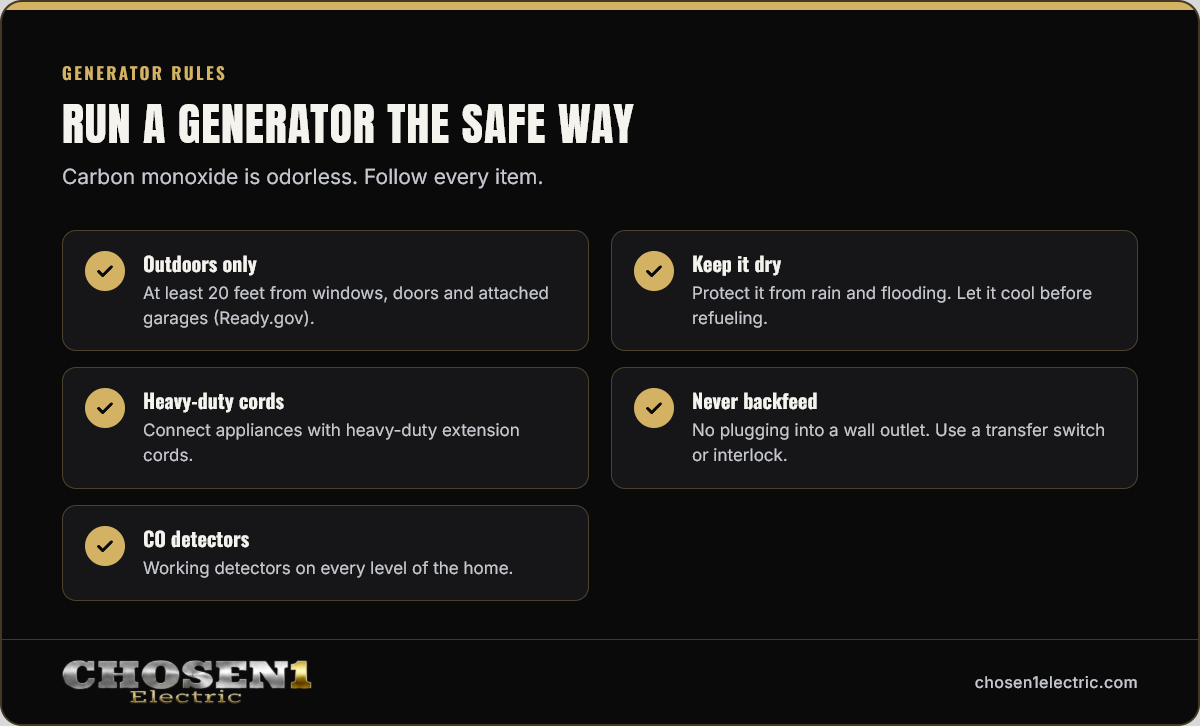
Oncor says any power line on the ground, a fence, a car, or another object can still be energized and is extremely dangerous. If you see one, keep away, keep people and pets away, and call 911. Oncor also notes that heavy ice can weigh down lines and tree limbs, which then fall onto lines.
Electricity can also spread through the ground around a fallen wire. CenterPoint Energy advises staying at least 35 feet away and shuffling away with your feet together if you are closer. Never move a limb that is touching a line, because electricity can travel through tree limbs.
Run a generator the safe way
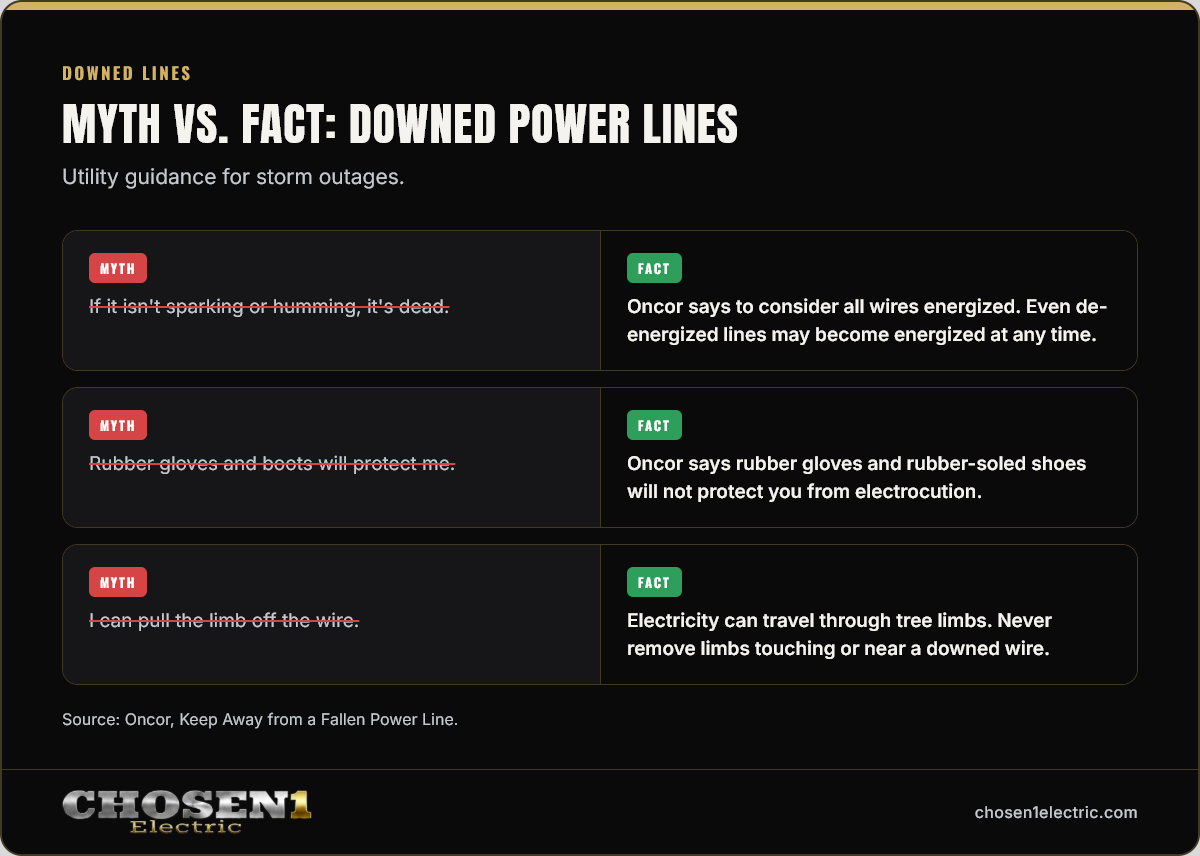
Ready.gov says generators and fuel should always be used outdoors, at least 20 feet from windows, doors, and attached garages. Carbon monoxide (CO) is colorless and odorless, so install working CO detectors on every level. Keep the generator dry, let it cool before refueling, and connect appliances with heavy-duty extension cords.
Never plug a generator into a wall outlet to power the house. That practice, called backfeeding, can energize utility lines and endanger line crews. The safe route is a transfer switch or interlock installed by a licensed electrician. If you rely on a portable or standby unit, our generator maintenance checklist for East Texas winter storms covers keeping it ready. For more on alarms, see how often to replace smoke and CO alarms.
Heating the house without creating a second emergency
Ready.gov warns never to use a gas stovetop or oven to heat your home, because of the carbon monoxide risk. Camp stoves and charcoal grills belong outdoors too, at least 20 feet from windows. Keep refrigerator and freezer doors closed to protect your food.
Protect your equipment when power returns
Ready.gov advises disconnecting appliances and electronics, because power may return with momentary surges or spikes that can cause damage. Many homeowners also leave one lamp on, so they can tell when service comes back, then reconnect things gradually. If storms keep hitting your electronics, ask about grounding and surge protection and read why East Texas homes may need a whole-home surge protector.
Power still off after the neighbors are back on?
It happens. Oncor explains that your neighbor may be on a different set of lines or circuit, and more damage may exist further down the line that feeds your home. It could also be your own equipment.
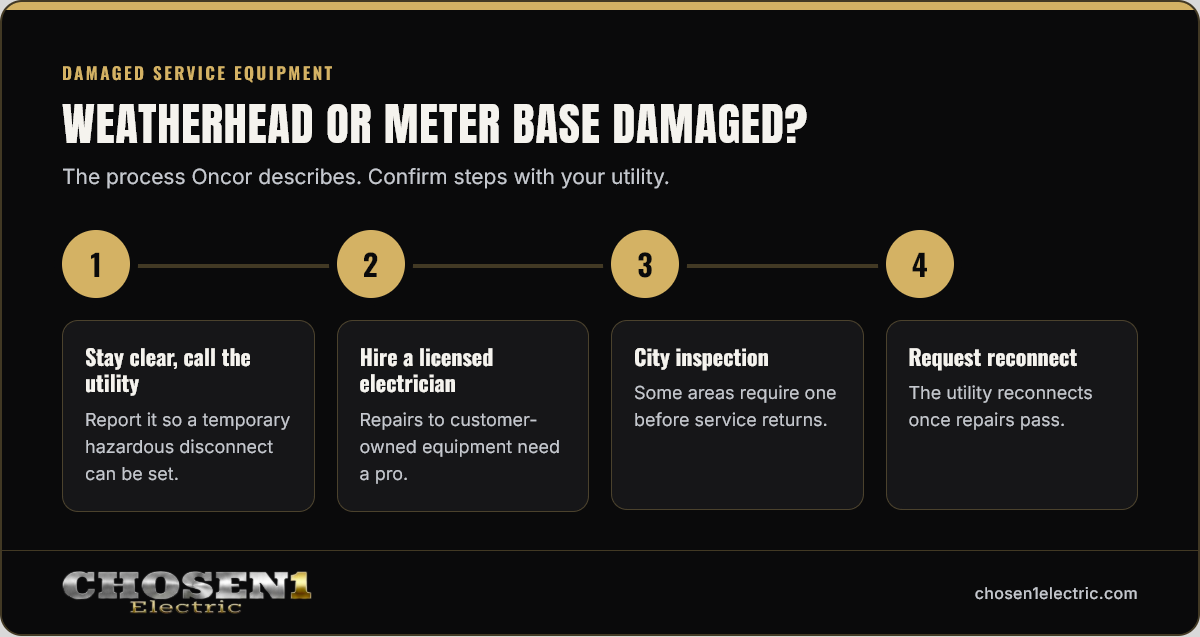
The weatherhead (the hooded cap where service wires reach your house), the wiring from it to the meter, and the meter base are generally the homeowner’s responsibility. If they are damaged or pulled off, Oncor says you need a licensed electrician for repairs, and it cannot safely reconnect power until they are done. Its process starts with a temporary hazardous disconnect, then repairs, then a city inspection where required, then a reconnect request. If another utility serves your address, confirm its steps.
Texas law requires non-exempt electrical work to be done by a licensed electrician working through a licensed electrical contractor, according to the Texas Department of Licensing and Regulation (TDLR). A tree service or handyman is not a substitute near service equipment.
When to call a licensed electrician
- The weatherhead, mast, or meter base is bent, loose, or pulled away from the house.
- You smell burning, see scorch marks, or hear buzzing at the panel or an outlet.
- Breakers will not reset after power returns. Our guide to why a breaker keeps tripping explains the common causes.
- Water got into outlets, the panel, or service equipment.
- You want a safe generator connection before the next storm.
We serve homes in Tyler and Longview and across East Texas.
Ice storm outage FAQ
Can I fix a damaged weatherhead myself?
No. It connects to utility lines, and Texas requires licensed electricians for non-exempt electrical work. Keep clear and report it to your utility.
Is a downed line safe if it is not sparking?
No. Oncor advises treating every wire as energized, and even de-energized lines can become energized at any time.
Should I use a candle or the stove for light and heat?
Use flashlights for light. Never use a gas stove or oven for heat, because of the CO risk.
Ice storms are hard on East Texas homes, and the right call early prevents bigger damage. Call Chosen 1 Electric at (903) 225-8558 to schedule a visit after a storm.