Generator Maintenance Checklist Before East Texas Winter Storms

Ice is glazing the pecan limbs outside a Tyler ranch house, and the East Texas forecast keeps flashing wind and outages. Will your generator actually start when the lights go out?
Generators fail more often from skipped maintenance than bad luck. A simple generator maintenance checklist—oil, filters, battery, fuel, a real exercise run, and a look at the transfer equipment—catches most problems while you still have grid power. For a licensed electrician to walk the system with you, our generator maintenance service starts with a scheduled visit.
The short answer: what to check before winter storms
- Read the owner’s manual for your exact model. Schedules differ by brand and size; this checklist doesn’t replace it.
- Confirm the unit can start under load: fresh oil, a healthy battery, a clean air path, sound fuel, and a recent successful run.
- Verify carbon monoxide and connection safety. Portables belong outdoors, well away from the house. Standby units need clear louvers and a working transfer switch.
- Schedule professional service if you’re overdue. Many standby makers recommend annual professional service.
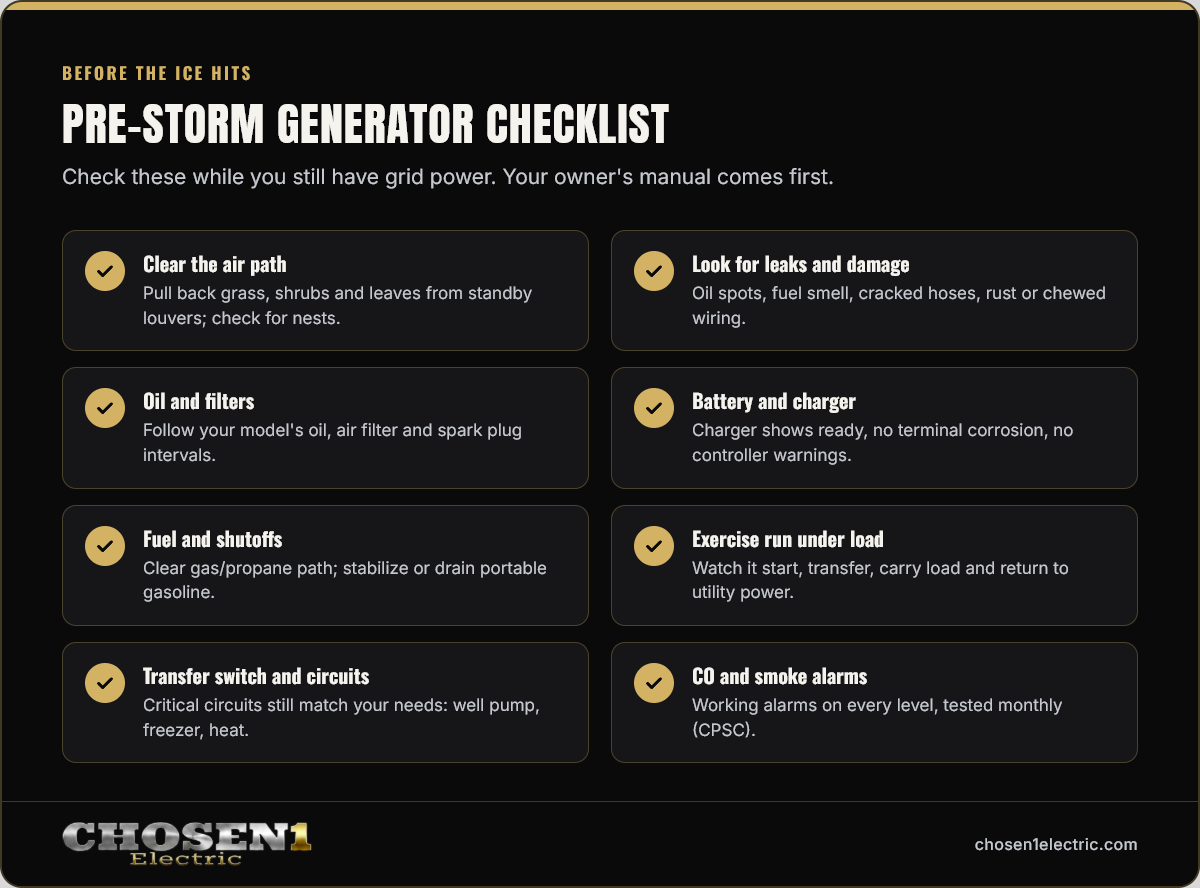
A practical pre-storm generator maintenance checklist
Inspect what you safely can and leave the rest to a technician. Never force panels, override interlocks, or attempt unlicensed electrical work.
1. Clear the enclosure and air path
Pull back grass, shrubs, and leaves from around standby louvers—blocked airflow can overheat the unit. Check for wasp and rodent nests.
2. Check for leaks and damage
Look for oil spots, fuel smell, cracked hoses, rust, and chewed wiring. A drip found in November beats a no-start at 2 a.m. in January.
3. Oil and oil filter
Standby manuals typically call for an oil and filter change after break-in, then every couple of years or few hundred hours—sooner with heavy use or extreme temperatures. If you can’t remember the last change, book service before storm season.
4. Air filter and spark plugs
Dusty summers and pine pollen load air filters, causing hard starts and weak power. Plugs and filters follow model-specific intervals; an annual visit inspects both.
5. Battery and charger
Cold exposes weak batteries. Check that the charger shows a healthy state, look for terminal corrosion, and note controller warnings. Load testing and replacement are technician work.
6. Fuel quality and shutoffs
Natural-gas and propane units need a clear fuel path—if you smell gas, leave and call for help. For portables, stale gasoline gums carburetors: stabilize fresh fuel or drain per the manual, and never store gas indoors.
7. Exercise run under load
The automatic weekly exercise run matters, but it doesn’t prove the house will carry critical loads. Run a controlled test per the manufacturer so you see the unit start, transfer, carry load, and return to utility power cleanly.
8. Transfer switch and critical circuits
Confirm critical circuits still match your needs—medical devices, well pump, freezer, heat. Panel wiring and transfer-switch repair are licensed electrical work in Texas.
9. CO and smoke alarms
The U.S. Consumer Product Safety Commission (CPSC) urges working CO and smoke alarms on every level and outside sleeping areas, tested monthly.
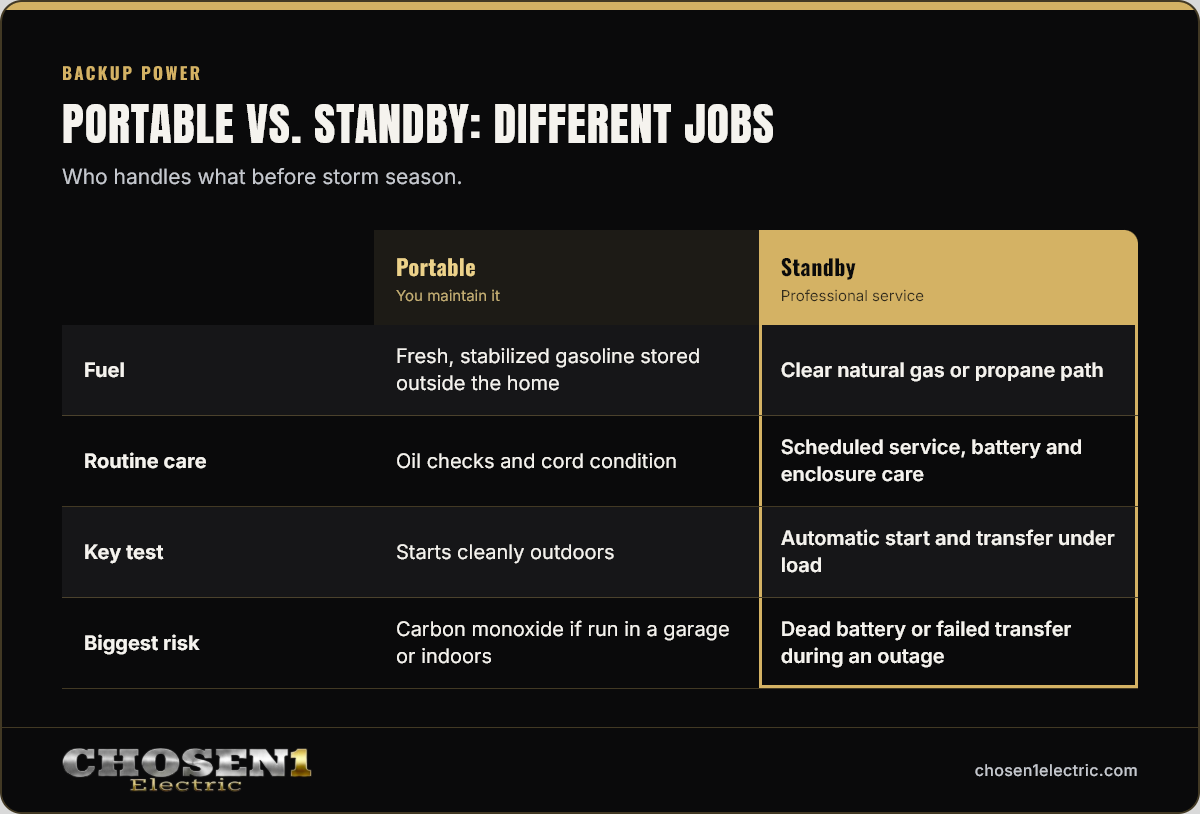
Portable vs. standby: different jobs
- Portable generators. You handle fuel freshness, oil checks, cord condition, and outdoor placement. The biggest risk is carbon monoxide when someone runs one in a garage “just for a minute.”
- Home standby generators. These rely on scheduled professional service, battery health, enclosure care, and proving automatic start and transfer.
Weighing whole-home backup for multi-day ice outages? See our standby generators page.
Why East Texas winters punish neglected generators
Ice storms, freezing rain, and high winds take down trees and lines across Tyler and Longview, and outages can last days. Idle months hide dead batteries and stale fuel, and once ice hits the forecast, service slots disappear fast.
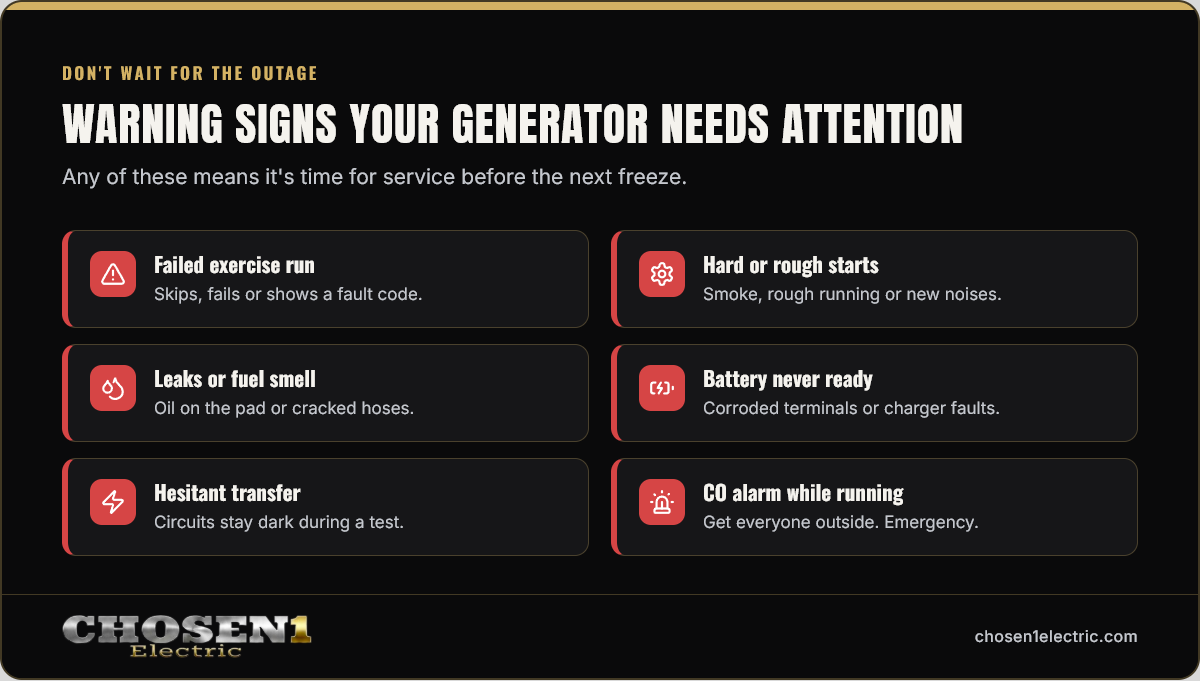
Warning signs your generator needs attention now
- The exercise run fails, skips, or shows a fault code.
- Hard starting, rough running, smoke, or new noises.
- Oil on the pad, fuel smell, or cracked hoses.
- Corroded terminals or a charger that never shows “ready.”
- Transfer that hesitates or leaves circuits dark during a test.
- Any CO alarm while a generator runs—get everyone outside and treat it as an emergency.
When to call a licensed electrician
The Texas Department of Licensing and Regulation (TDLR) requires non-exempt electrical work to be done by a licensed electrician through a licensed contractor. Call a pro if your unit is past its service window, fault codes keep returning, the transfer switch needs attention, or you want a proper inlet and interlock instead of a dangerous dryer-outlet backfeed.
Chosen 1 Electric serves homeowners in Tyler, Longview, and across East Texas. Pair maintenance with an electrical inspection if your panel or grounding hasn’t been checked in years. Confirm permit requirements with your local building department.
Frequently asked questions
How often should I service a home standby generator?
Follow your owner’s manual. Many manufacturers recommend professional service at least once a year, with oil, filter, and battery work tied to hours or multi-year intervals.
Can I run a portable generator in my garage with the door open?
No. CPSC says never run one inside a home, garage, basement, crawlspace, or shed, even with doors open. Run it outdoors at least 20 feet from the house, exhaust aimed away from windows, doors, and vents.
What’s the most important check before an ice storm?
Prove a successful start and load transfer while the weather is calm, confirm fuel, oil, and battery are in spec, and test your CO alarms that same week.

Want a licensed eye on your generator before the next East Texas freeze? Call Chosen 1 Electric at (903) 225-8558 or Schedule a Visit and we’ll check the system and walk you through what it needs.